
By Tom Barrance
October 2025
If you’re making videos for people to watch on their phones, you need to learn how to shoot vertical video. And you want to make great vertical videos, you should be thinking vertical from the start.
Some filmmakers and videographers don’t like vertical. To me, it’s an interesting creative challenge.
Instead of thinking just about what you’re missing, think about what you gain. More sky and foreground give a sense of space and depth. And you can get creative with vertical movement.
After all, filmmakers have been experimenting with vertical video since long before smartphones. In the 1980s musician Brian Eno shot vertical art videos of the Manhattan skyline which had to be screened on televisions turned on their side. There’s even an international festival of vertical cinema which has been running for a decade.
So here are my tips for shooting great vertical videos.
Compose vertically
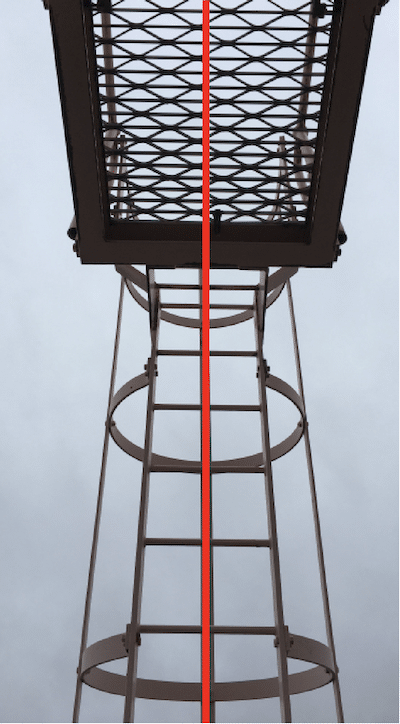
Organise your compositions around a central vertical axis, rather than using a horizontal ‘rule of thirds’ . Forget about ‘looking space’ – the frame is too narrow for that.

Try using ‘leading lines’ to draw viewers attention to the upper part of the image.
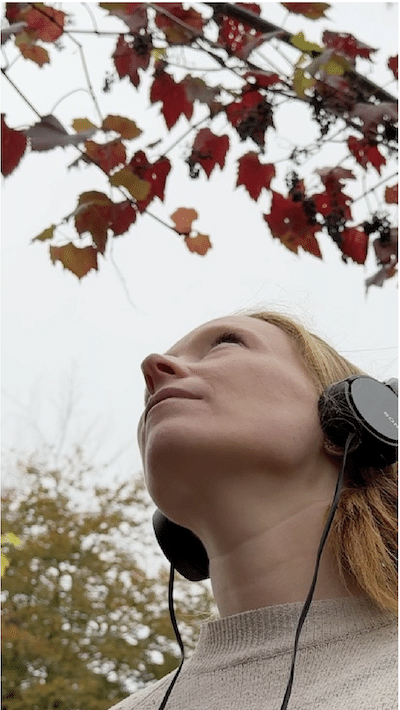
Put things above and below each other instead of side by side.
Avoid the bottom third

A lot of vertical videos end up with text overlays on the bottom part of the image. So don’t put anything important there.
Use the right lens

Foreground objects can give the image depth. And a wide-angle lens can make perspective seem dramatic and emphasise the foreground and the sky. But don’t shoot vertical close-ups of people with a wide-angle lens. There’ll be too much distortion at the top and bottom of the image.
Sometimes the vertical frame can cause problems if there’s stuff in the foreground you don’t want to show. You can use a telephoto lens to avoid this.
Use vertical movement and depth
Vertical video gives you the chance to experiment with different kinds of camera movement. Try to avoid horizontal movement: you need to be using movement which uses the height of the image. So you can tilt or crane your camera up or down, or include a subject moving up or down.
It’s also OK to track in or out. And you can put movements together as well, tracking in and tilting up.
Try to avoid pans and sideways tracking shots.
You could use an arc shot. Here, the subject stays in the centre of the frame and the camera moves around them. So the subject doesn’t move sideways but the background does.

You also need to think vertically when you’re thinking about subject movement. Have your subject moving towards or away from the camera, up or down, rather than across the frame.
How to shoot vertical and horizontal
If you have to shoot for both formats, it’s best to plan them separately rather than just cropping horizontal to vertical.

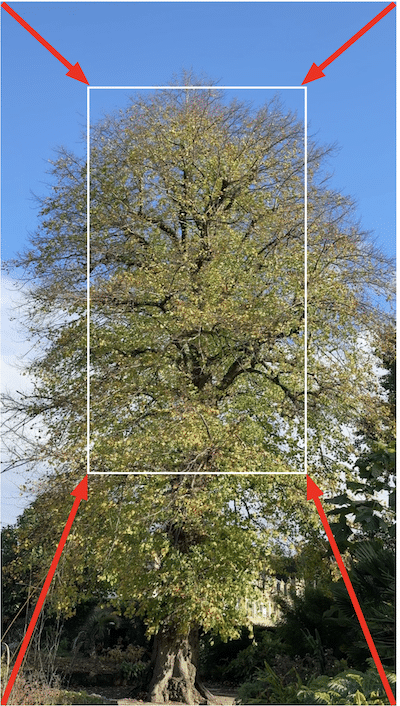
You could film the horizontal version with a standard lens, like this.

Then film the vertical version with a wide-angle lens, adding to the top and bottom of the image.
If you have to crop a horizontal image to vertical, you’ll need to frame it loosely.

Some cameras can film ‘open gate’, where they use the whole height of the sensor for a 4:3 image. This gives you more scope for cropping.
Equipment
Shooting vertical with a smartphone is easy: it’s what they’re made for. But if you need better image quality, or you’re shooting in difficult lighting conditions, you might need to use a mirrorless or cinema camera.
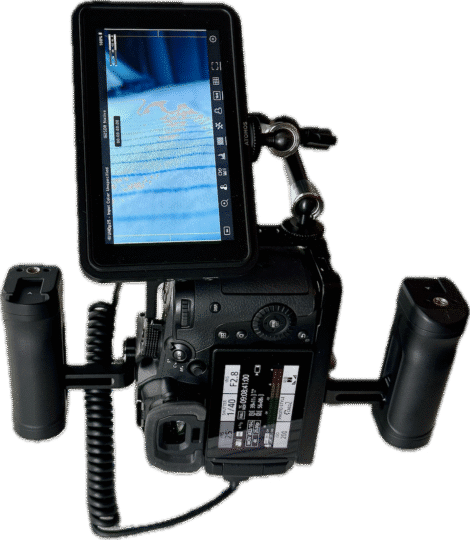
You could mount your camera on a tripod with an L bracket. For run and gun vertical shooting, I put my Panasonic GH5 II camera (above) in a SmallRig cage and mounted side handles and a Shinobi Go monitor. The camera and 12-35 lens combination has great image stabilisation so I don’t need a tripod.
My Filmmaking Ebook
 Start Making Movies is my 163-page illustrated guide to filmmaking, drawing on more than thirty years' experience of teaching film. It starts from the basics and takes you through how films tell stories, what gear you need, and how to plan, shoot and edit your own short movies or videos.
If you can't afford the guide price of $14.99, just pay what you can.
Check it out here
Opens Payhip store in a new tab.
 “This book is amazing” Tiffany, USA
“A great visual primer…Highly recommended” Peter Hearns, UK
“Full of great tips and advice” Deborah, Australia
“This book is amazing” Tiffany, USA
“A great visual primer…Highly recommended” Peter Hearns, UK
“Full of great tips and advice” Deborah, Australia